Product Description
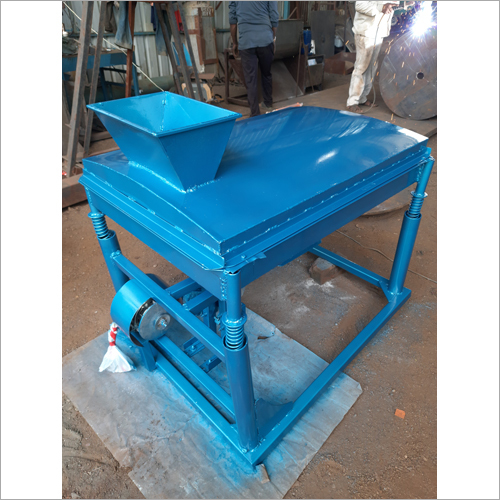
The vibrating screen is a kind of sieving equipment of international advanced level, developed by our company on the basis of carrying on the advantages of traditional screens and absorbing the outstanding technology from abroad. It is widely used for grading and screening materials in the following fields: minerals, quarry, building materials, water conservancy and hydropower, transportation, chemical industry, smelting and so on.
Features
- High vibrating force with unique eccentric structure. Adopt advanced construction, making the vibrating force powerful.
- The beam and case of the screen are connected with high strength bolts without welding.
- Simple structure, easy to repair.
- Adopt tire clutch with capability of flexible connection and stable operation.
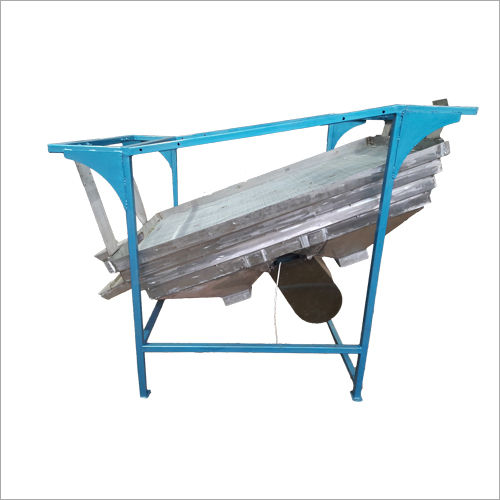
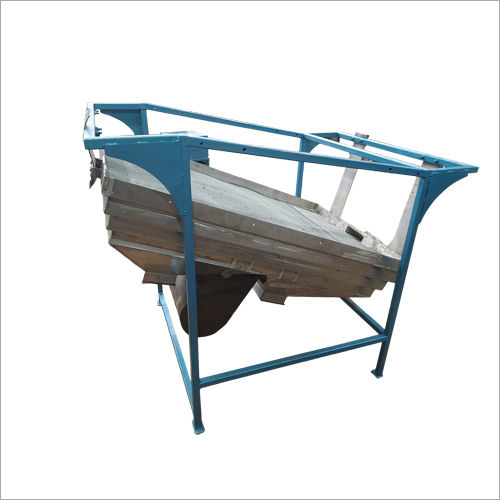
- Small amplitude, high frequency, large-inclination structure, high efficiency, large capacity, long service life, low power consumption and noise.
- High utilization rate of screen, large unit area, not easy to block, but easy replacement of screen.
Application
The vibrating screen is widely used for grading and screening materials in the following fields: minerals, quarry, building materials, water conservancy and hydropower, transportation, chemical industry, smelting and so on.
Efficient Screening PerformanceDesigned for consistent and precise separation, our vibrating screen leverages electric power and linear or rotary vibration modes, maximizing throughput and accuracy. The wide screen opening size range and multiple layers render it adaptable for various industrial materials requiring separation, allowing operators to fine-tune output for graded results.
Flexible Operation and ConfigurationWith flexible automation options-semi-automatic or fully automatic-this screen system supports continuous usage. It provides bottom or side discharge outlets, ensuring smooth material flow tailored to specific workflow requirements. The floor-mounted, stable structure further enhances safe, long-term operation even under demanding working conditions.
Durable Design for Industrial EnvironmentsConstructed from mild steel and coated with a smooth powder finish, the vibrating screen stands up to harsh industrial applications. Available in blue or grey, its sturdy, rectangular shape fits within various plant layouts, and the wire mesh media (perforated or crimped) offers resilience against abrasive materials. Low noise and power-efficient operation keep the workplace comfortable and costs minimized.
FAQ's of Vibrating Screen:
Q: How does the vibrating screen process material for industrial separation?
A: The vibrating screen utilizes linear or rotary vibration modes initiated by an electric motor to separate materials based on size. Feed material up to 100 mm is distributed across mesh layers with openings between 0.5 mm and 20 mm, ensuring effective sorting and discharge through side or bottom outlets.
Q: What are the benefits of using an electric motor-driven vibrating screen?
A: Electric motor-driven vibrating screens provide continuous operation, consistent performance, and efficient material separation. With 3 HP power and low energy consumption (2-5 kW), they offer reliable throughput, minimal maintenance, and low noise, making them suitable for extended industrial use.
Q: When is it ideal to use this vibrating screen in an industrial setting?
A: This vibrating screen is ideal for processing and separating bulk materials in industries such as mining, chemical, pharmaceutical, and food. Its robust construction and versatility in screen opening sizes allow for usage whenever precise particle grading or removal of unwanted materials is required.
Q: Where can the vibrating screen be installed for optimal operation?
A: The unit is designed for floor mounting in fixed locations within industrial plants. Its rectangular shape and size (2000 x 1000 x 1200 mm) make it easy to integrate into existing workflows, ensuring stable performance and safe handling during operation.
Q: What process does the screen use to separate and discharge materials?
A: Material fed onto the screen is vibrated by the electric motor, passing over single or multiple mesh layers. Particles smaller than the mesh opening drop through, while larger ones are conveyed to the discharge outlet-either bottom or side-per specific requirements for efficient material handling.
Q: How can users adjust screening parameters to fit different applications?
A: Users can select mesh type (perforated or crimped), adjust layer configuration, and opt for either semi-automatic or automatic operation. The choice of discharge outlet position, vibration mode, and screen opening sizes allows customization to match the material and separation needs of particular workflows.








 Send Inquiry

 Send Inquiry
 Send SMS
 Call Me Free


